
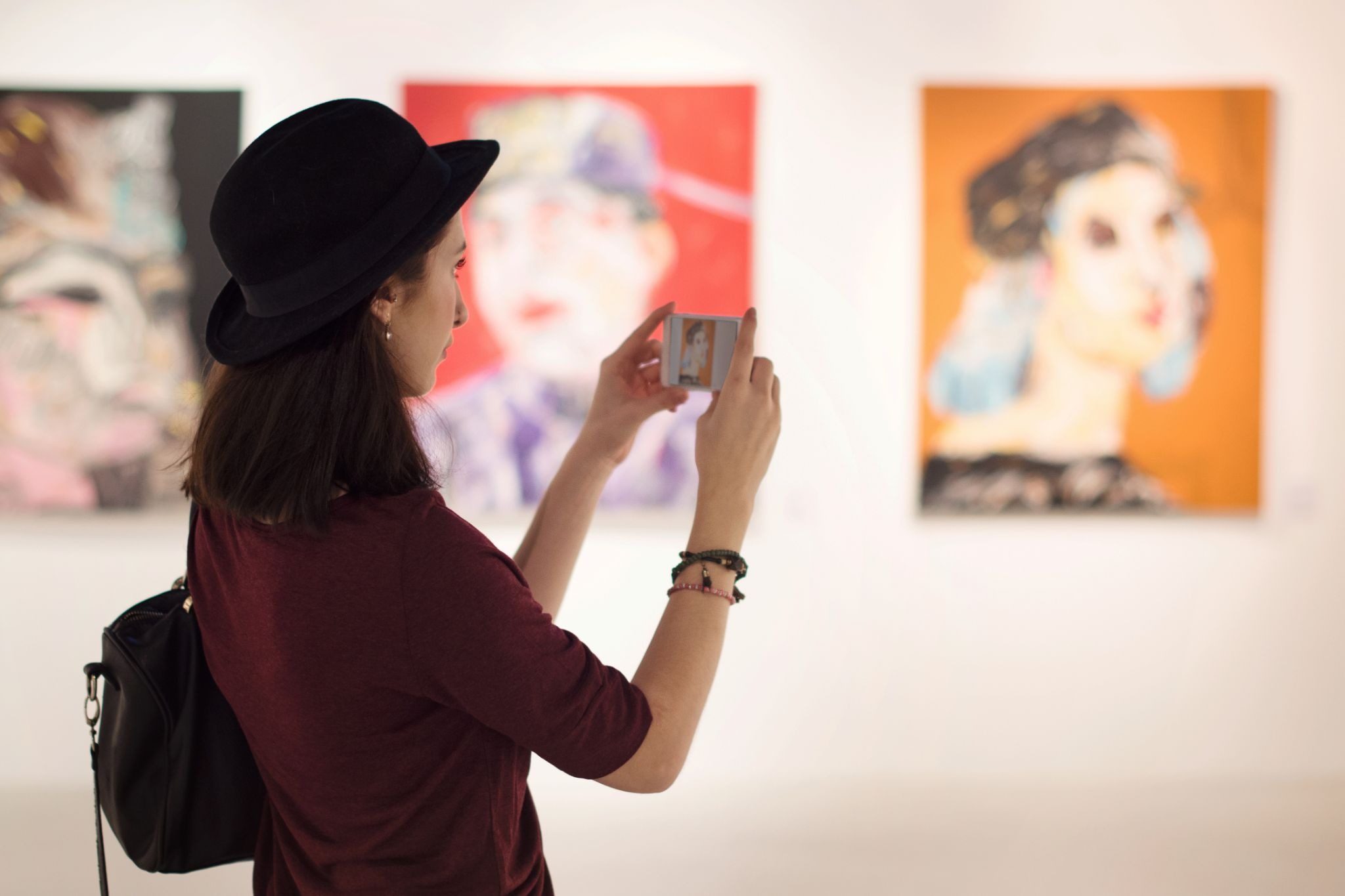
Art has never just hung on a wall waiting to be admired. It has always been in conversation with the people standing in front of it. But today, that conversation has grown louder, more personal, and far more complex. Contemporary art exhibits are doing something remarkable ,they are changing not just what people think about art, but how they feel about it, talk about it, and carry it with them long after they leave the gallery. The public perception of art is no longer shaped in classrooms or through dusty encyclopedias. It is being shaped in real time, inside galleries, museums, and pop-up spaces that are rethinking every assumption about what an art experience can be.
The Shift in How People Experience Art Today
For most of the twentieth century, walking into an art museum felt like entering a temple. You whispered. You moved slowly. You looked at things you were told were important, and you either felt enlightened or quietly intimidated. That dynamic has fundamentally changed. Contemporary art exhibits have broken down the invisible wall between the artwork and the viewer, and the public perception of art has shifted because of it.
Today’s exhibits are designed with the audience’s emotional experience at the center. Curators are not just arranging pieces on a wall ,they are building environments, crafting emotional journeys, and asking visitors to participate rather than simply observe. This shift matters enormously because it changes who feels welcome in an art space and who feels like art is meant for them.
Why Traditional Gallery Models Were Limiting
The traditional gallery model had a deeply exclusionary quality, whether it intended to or not. The white walls, the silence, the absence of context ,these elements sent a message: you either already know how to engage with this, or you don’t belong here. Research in museum studies has consistently shown that first-generation museum visitors often describe feeling like outsiders, regardless of how much they might have enjoyed the artwork itself.
Contemporary exhibits have recognized this problem and responded with radical accessibility. Labels have grown longer and more human. Audio guides have become storytelling tools. Wall text now reads like a letter to the visitor rather than a catalog entry. These changes sound small, but their effect on public perception of art has been enormous. When people feel informed and welcomed, they feel ownership. And when they feel ownership, art stops being something that belongs to experts and starts being something that belongs to everyone.
Immersive Environments and Emotional Memory
One of the most significant developments in contemporary art exhibits is the rise of immersive, environment-based experiences. Spaces like teamLab’s digital art installations, Rain Room by Random International, or the large-scale works of James Turrell do not ask you to look at a piece ,they ask you to step inside one. The experience becomes physical. Your body is part of the work. The light falls on your skin. The sound moves around you.
How Curatorial Choices Shape the Story Art Tells
Behind every compelling exhibit is a curatorial vision that decides what story is being told and who gets to tell it. These decisions are not neutral. They reflect values, priorities, and beliefs about whose experience of art matters. And they have a direct, measurable impact on how the public understands and responds to what they see.
The Power of Context and Narrative Framing
Context is everything in art. The same painting, placed in two different exhibits with two different framing narratives, can produce completely opposite emotional and intellectual responses. A portrait of a colonial-era figure placed in an exhibit celebrating conquest tells one story. The same portrait placed in an exhibit examining the violence of empire tells an entirely different one. Contemporary curators are acutely aware of this power, and many are using it deliberately to reshape public perception of art and history simultaneously.
Expert curator and art critic Dr. Elena Ferraro, who has worked with major institutions across Europe and North America, puts it plainly: “The exhibit is never just about the objects. It is always about the argument the objects are being asked to make. Visitors absorb that argument even when they are not consciously analyzing it. They walk out with a feeling, and that feeling was constructed by every choice made in the room.” This kind of intentional narrative building is what separates a forgettable show from one that genuinely shifts how people think.
Diversity in Representation and Its Ripple Effects
Contemporary art exhibits have, in recent years, made significant moves toward more inclusive representation ,featuring more artists of color, more women artists, more artists from the Global South, more work that centers experiences outside the Western European canon. This shift is not just about fairness, though it is certainly about that. It is about expanding the emotional and intellectual range of what the public understands art to be.
When someone walks into an exhibit and sees their own experience reflected in the work ,their culture, their language, their body, their history ,something clicks. Art stops being abstract and starts being intimate. This recognition effect has a powerful influence on public perception of art because it transforms the act of viewing from one of evaluation to one of connection. And connection, more than any critical framework, is what makes art matter to people long-term.
Social Media, Public Exhibits, and the Viral Moment
No discussion of contemporary public perception of art is complete without examining the role of social media. Instagram, TikTok, and other visual platforms have created an entirely new layer of engagement between exhibits and the public ,one that happens outside the gallery walls and reaches millions of people who never set foot inside.
When Art Becomes Content
There is an ongoing and genuinely fascinating debate about whether the rise of Instagram-friendly art is a good thing or a corruption of artistic intent. Critics argue that when exhibits are designed to produce shareable moments rather than meaningful experiences, they prioritize surface over depth. Supporters argue that if a colorful installation brings ten thousand new people into an art space who would otherwise never have entered, that is an unambiguous cultural good.
The truth, as it often does, lives in the complexity between these positions. What is undeniable is that social media has dramatically expanded the reach of contemporary art exhibits and, in doing so, has reshaped public perception of art in ways that would have been unimaginable twenty years ago. When a Yayoi Kusama Infinity Mirror Room goes viral, millions of people engage with questions about infinity, reflection, self, and space ,even if they engage with them through a selfie. That engagement is the beginning of a relationship with art, not the end of it.
The Second Life of Exhibits Online
Contemporary exhibits now routinely have a second life online that extends their influence far beyond their physical location and duration. Virtual tours, artist interviews, behind-the-scenes content, and online critical discussions mean that an exhibit in Seoul can shape the public perception of art in São Paulo or Lagos. This democratization of access is genuinely new and genuinely significant.
Art Exhibits as Sites of Social and Political Dialogue
Contemporary art has always engaged with social and political reality, but today’s exhibits are doing so with an urgency and directness that is impossible to ignore. Climate change, racial justice, gender identity, migration, economic inequality ,these themes are not background noise in contemporary exhibits. They are front and center, and they are shaping public perception of art as a form of civic engagement rather than private aesthetic pleasure.
How Political Art Moves Beyond Preaching
The risk of politically engaged art is that it becomes didactic ,that it tells people what to think rather than inviting them to feel and question. The best contemporary exhibits understand this risk and navigate it with skill. They use ambiguity, beauty, and emotional complexity to open conversations rather than close them.
Artist Kara Walker’s work is a powerful example. Her large-scale silhouettes deal with the history of slavery and racial violence in America with an aesthetic grace that refuses easy comfort. Viewers are not told what to feel. They are confronted with images that are simultaneously beautiful and devastating, and they must work through that contradiction themselves. That working-through is where real shifts in perception happen. It is not propaganda. It is art doing what only art can do.
Community-Based Exhibits and Local Transformation
Some of the most powerful contemporary exhibits are not happening in famous institutions. They are happening in community centers, empty storefronts, public parks, and neighborhood galleries. These community-based exhibits have a unique capacity to influence local public perception of art because they are rooted in specific places and specific people.
When an exhibit is built in collaboration with the community it represents ,when local residents are part of the curatorial process, when local histories are centered, when the space itself is a statement about who gets to make and show art ,the impact on public perception is both immediate and lasting. People who have never thought of themselves as art audiences become engaged participants. The idea that art is for other people, people with more education or more money or more cultural capital, begins to dissolve.
The Long-Term Impact on Cultural Literacy and Empathy
The influence of contemporary art exhibits on public perception is not just about how people think about art. It is about how people think, period. Engagement with art ,sustained, thoughtful, emotionally open engagement ,builds capacities that matter far beyond the gallery: empathy, tolerance for ambiguity, comfort with complexity, and the ability to hold multiple perspectives simultaneously.
Building a More Visually Literate Society
Visual literacy ,the ability to read and interpret visual information critically ,is one of the most undervalued skills in contemporary life. We live in a world saturated with images, and most people have almost no formal training in how to analyze or question them. Contemporary art exhibits are one of the few spaces in public life where visual literacy is actively cultivated.
When a visitor spends time with a photograph by Zanele Muholi or a painting by Kerry James Marshall, they are not just appreciating beauty. They are learning to look. They are developing the ability to understand how composition, color, scale, and subject work together to create meaning. These skills transfer directly to how people engage with advertising, political imagery, news photography, and every other visual medium that shapes their understanding of the world.
Art Exhibits and the Expansion of Empathy
There is growing evidence from psychology and cognitive science that engaging with art ,particularly art that centers human experience different from your own ,measurably increases empathy. Contemporary exhibits that foreground personal testimony, lived experience, and emotional honesty create conditions for genuine empathy expansion. Visitors encounter lives they might never otherwise encounter, framed with dignity and complexity rather than pity or spectacle.
This empathy-building function of contemporary art exhibits is perhaps their most profound contribution to public life. In a cultural moment defined by polarization and the collapse of shared reality, spaces that invite genuine encounter with the experience of the other are not luxuries. They are necessities.
Final Thought
The public perception of art is not a fixed thing. It is living, breathing, and constantly being remade by the experiences people have inside the spaces where art lives. Contemporary art exhibits, at their best, are not just showing work ,they are building new ways of seeing. They are expanding the circle of who feels entitled to engage with art, deepening the emotional register of what that engagement can mean, and connecting aesthetic experience to the most urgent questions of our time. Every person who walks out of an exhibit changed, even slightly, carries that change into the world. That is not a small thing. That is, in fact, everything art has ever tried to do.